Many people like to enjoy the fresh air and serenity of rural areas. But this does not necessarily mean you have to sacrifice high speed Internet access simply because you are located outside the reach of DSL or cable connections.
In early 2014, the federal appeals court in Washington DC upheld an effort by the Federal Communications Commission that will convert a rural telephone service into a service that will subsidize broadband Internet access in rural areas. The 4.5 billion dollar program would bring high speed Internet access to rural areas where broadband implementation would otherwise be cost prohibitive.
The program represents a portion of the $9 billion Universal Service Fund and is known as Connect America. The Universal Service Fund supports a variety of projects that offer telecommunications links to low-income families, community resources, schools, and more.
Although there are various global efforts underway that are similar to the FCC project, access to high speed Internet in rural areas still is a challenge. This is mainly because most rural areas are not equipped with Digital Subscriber Lines (DSL) or cable access due to the excessive cost of installation by the cable providers.
Up until the last decade, the only type of Internet access available was dial-up through your telephone line. Dial-up access is also the slowest Internet connection available and certainly does not accommodate a lot of the current day bandwidth-intensive applications such as video streaming, VoIP programs such as Skype, media box and Xbox applications, and home entertainment options such as Internet TV.
So, if you live in a rural area and do not have access to a Digital Subscriber Line (DSL) or cable connection what are your options?
How to Get Broadband Internet in Rural and Remote Areas
Although government agencies are working with cellular and rural telephone carriers to bring broadband to underserved areas, if the area in which you live has still been left behind when it comes to high speed Internet access, don’t give up. You do have some options available when it comes to achieving a high speed broadband Internet connection. Here are a few possibilities that are worth looking into:
1. Satellite Internet
If DSL or cable is not available in your area, one of the best options for accessing broadband in a rural area is a satellite Internet connection. Regardless of where you live, you can achieve a high-speed connection as long as you have a clear view of the southern sky.
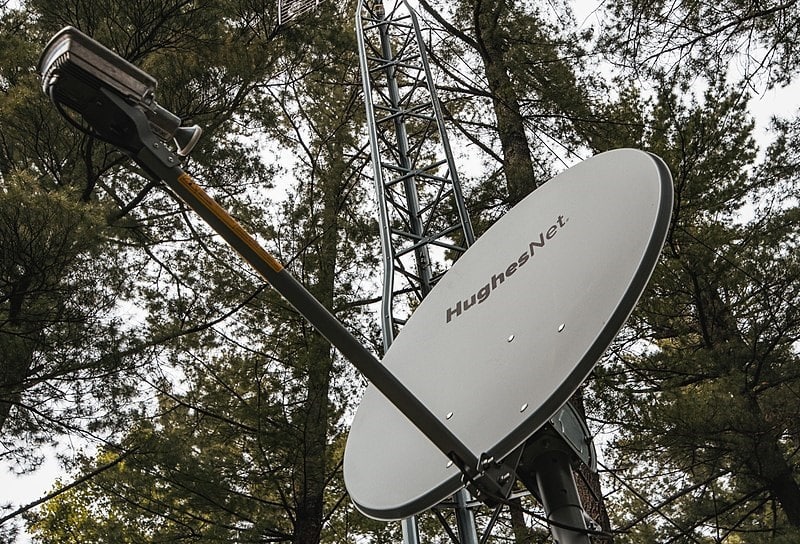
A satellite Internet connection involves the installation of a satellite dish that picks up a high-speed broadband signal from the southern sky. This makes it possible for even the most remote locations to achieve a high-speed Internet connection. You can obtain a high speed broadband Internet connection via satellite through providers such as HughesNet, DISH Network, and Wild Blue.
Many of the satellite providers have also been working toward improving their services with improved performance, faster data speeds, and larger capacity for easier downloading of data. For example, HughesNet recently released a service known as Gen4 which provides customers in rural areas with fourth generation high speed broadband Internet access.
The improved broadband connection allows customers in rural areas to access bandwidth-intensive applications. This includes streaming videos, accessing high bandwidth apps, games, and many of the other current technologies that require more bandwidth in order to function properly.
With a satellite Internet connection you will have the expense of the satellite installation and then a monthly fee depending upon the service plan that you choose. The connection is very consistent with the exception of the occasional heavy storm or excessive cloud cover. The video below will provide you with more helpful information on accessing satellite Internet.
2. Mobile Broadband
Using a broadband card to achieve a high speed connection is another option for rural areas. If you have access to cellular telephone service you can obtain a MiFi device or USB dongle. A MiFi device is about the size of a credit card and allows you to set up a mobile hotspot using your cellular wireless carrier service.
Cell phone providers also offer USB dongles and Internet cards which plug into the USB connection or PCMIA port on your PC to allow access to high speed broadband Internet via your 3G or 4G carrier service.
You can obtain this type of connectivity through your local cellular phone provider but, keep in mind that some of the carriers require a contract with an added monthly service fee on top of your regular monthly cell phone bill. You must also be able to access a cell phone signal from the rural area where you are located. Here is a visualization on how mobile broadband can be accessed in a rural area.
3. Tethering Hotspot
If you are fortunate enough to have 3G or 4G access in in the rural area you live in, this is an option you can pursue to gain access to high speed Internet. Many of the cell phone plans will limit you to a specified amount of gigabytes for data transmission, but this is better than having to deal with the hassles of a slow dial up connection. Using your smartphone as a hotspot may not be as fast as cable or a Digital Subscriber Line (DSL), but it is a lot better than nothing at all.
Some of the cellular carriers offer tethering hotspot plans. These are plans that allow you to use your smartphone as a portable hotspot to provide your PC or tablet with access to a high speed broadband Internet connection. In order to establish a connection using this method, both devices must be equipped with Bluetooth capability.
If your cellular carrier does not offer a plan, you can still tether your smartphone to your laptop and then connect through your 3G or 4G data plan. The process involves activating the Bluetooth service on both devices so they recognize one another. Then you simply choose the appropriate Wi-Fi network which is relevant to your smartphone.
The only drawback to using this method is the use of data for your 3G or 4G service. Depending upon the data plan you have with your cellular carrier, overage fees may apply if you exceed your data limit. It is wise to check into this before considering this option for high speed broadband Internet.
The following video will provide you with more useful information on using your smartphone as a hotspot to access a wireless Internet connection.
4. BPL
BPL is another potential option for accessing the Internet in rural areas. Just imagine connecting your PC to an electrical outlet in your home and accessing high speed Internet. This is what BPL is all about.
BPL stands for Broadband over Power Lines and utilizes conventional power lines to establish a high speed Internet connection via the AC outlets in your home. It works by plugging an adapter into any available AC outlet to achieve high speed Internet access in any room of your home. BPL is considered to be an emerging technology and is being used in a small number of areas to provide high speed Internet to residents in rural areas.
The concept has caught on in European countries and is just beginning to be introduced to some areas in the United States. The delay in the US is mainly due to the significant difference in power system designs between countries in Europe and the US.
The difference in the power system configuration is related to step-down transformers which are used in US designs to reduce the voltage for consumer use. The signal produced by Broadband over Power Lines is incapable of being transmitted through the transformers making it necessary for repeaters to be attached to each transformer. A repeater must be installed on an electrical pole to serve a single family dwelling where in Europe, one transformer can serve up to 100 homes or more.
Here is a video that will demonstrate more about how Broadband over Power Lines (BPL) works and why it can be effective way to bring high speed broadband access to rural areas.
5. Long Range Wi-Fi Antenna
This is a less common way to achieve a high-speed broadband Internet connection. Nevertheless, it is worth looking into because the concept is being deployed in a few rural areas. A long range Wi-Fi connection involves placing an antenna on the outside of your home to achieve high speed access to a connection that is several miles away.
Long range Wi-Fi is often used in rural areas as an alternative to DSL, cable, satellite Internet, or fixed wireless. This type of technology typically runs on 802.11/b/g/n and varies in range according to the type of antenna and the transmission power in the environment where you are located. The concept was developed for businesses that operate from a remote site and second homeowners that have a vacation home in a remote location.
Recently, long range Wi-Fi has been considered as an alternative for accessing high speed Internet in rural areas. There are many different types of Wi-Fi antennas that range from larger devices that you can mount on your roof as shown in the video below to other smaller portable devices that you can use in your home or RV when camping.
You can also opt to add a long range Wi-Fi booster which is also known as a repeater. If the reach of the antenna range is not enough to access the nearest wireless broadband point, a long range Wi-Fi repeater will amplify the signal to help you achieve Internet connectivity.
Basically, a repeater is a transceiver that picks up electromagnetic signals and amplifies them. The device receives the signal from a nearby wireless router or antenna, amplifies the signal, and then retransmits it to increase the reach of the signal over longer distances. The signal which otherwise would decrease or die out when it reaches a certain distance, can then be transmitted over a longer distance.
Like long range Wi-Fi antennas, a long range Wi-Fi repeater is offered in a variety of different types of devices that vary in capability.
6. WiMAX
If you are fortunate enough to be located within range of 3G or 4G connectivity with your cellular phone service, you can achieve a high speed Internet connection using WiMAX. WiMAX stands for Worldwide Interoperability for Microwave Access and is a much faster connection than a Digital Subscriber Line (DSL).
WiMAX is available through a variety of wireless carriers such as Sprint, AT&T and others. The configuration consists of a tower and receiver and functions similar to a cell tower concept. The difference is that the WiMAX tower is capable of providing Internet connectivity to a much larger area, potentially covering as much as three thousand square miles.
The WiMAX receiver utilizes an antenna and a PCMCIA card or small box unit. The receiver can also be built into your device in the same way most devices are equipped with wireless Internet capability. The connection provides high bandwidth using a T3 line or, it can establish a connection using a microwave link in the line of sight.
The line of sight connection is a stronger and faster connection than a non-line of sight connection. This is because the line of sight connection is pointed directly at the WiMAX tower where a non-line of sight connection connects to the tower using an antenna in your device.
The following video will provide you with a visual example of how WiMAX works using an antenna and a hub modem from CLEAR.
7. Google Internet Balloons (Discontinued)
Although this project is in the very early stages of testing, Google has been working on launching Internet-beaming antennas in an effort to provide high speed Internet access to the entire planet earth. This project is known as Project Loon and involves the creation of balloons that are capable of flying around the globe. Antennas are placed inside of giant balloons that are shaped like a jellyfish with the goal of creating an entirely connected planet.
When Project Loon was first announced in June of 2013 in New Zealand, the top-secret project was already underway for 18 months. As a test, Google has been providing Internet access to a specified number of volunteer households using translucent helium balloons. The balloons use the wind to sail up to 12 miles above the surface of the earth providing Internet access to areas approximately twice the size of New York City and in excess of 730 square miles.
Although Project Loon still has a long way to go, in the future it may represent another alternative for residents in rural areas and highly remote locations to access high speed broadband Internet. If you are interested in seeing more on how Project Loon works, here is an interesting video on the effort.
Hopefully, some of these options will help you to establish access to high speed broadband Internet if you live in a rural area. It is also important to mention that it is well worthwhile to stay updated on the latest trends in high speed Internet connectivity in rural areas. There are many other initiatives underway in addition to Project Loon, which may help to extend the reach of broadband. Plus, there are new technologies being developed within power companies and other sources that are yet to be announced which may eventually help to accommodate residents who live in remote or rural areas.
Good article for rural area connectivity. I didnt know there were that many options for getting broadband in the rural area.
I live half a mile out of town and can’t get DSl or cable internet. The long range Wifi is their a certain atenna you need to buy or how does it work?
God I cannot wait for 100 mps home connections 😉 ! Bring on the fiber
In my village only 2 kilometres ptcl dsl connection can i do wifi from there can i
Me and my family live at a camp surrounded by broadband internet users, and yet, we can’t get it. That long-range wifi thing:I have friends thtat live at homes within a 1-3 mile zone that have wifi at their house, and I was wanting to know how much that antenna cost and specifically what it is. And if we couldn’t get that(that wouldn’t be the first time we’ve heard that), what could we get? Someone plz respond ASAP
Sorry for being ten years late,
What antenna are you specifically talking about?
Provide me valuable information for wifi
and also, we don’t have major amounts of income, so if u could find something dirt cheap or surpirsingly affordable, that would help. God bless.
Don’t forget broadband over power lines:
http://en.wikipedia.org/wiki/Power_line_communication
A few additional points that may be of interest:
It’s fairly well understood that if you can get DSL or cable, do it. Either will be a better bang-for-the-buck than these other alternatives we are discussing.
For broadband wireless (Verizon, Sprint, etc.), now that EVDO and other high-speed wireless connections are becoming more available, this should probably be your next choice after DSL or cable. Note that some locations on the edge of wireless coverage may be able to increase signal strength (and thus connection reliability and speed) through the use of appropriate antennas. The site http://www.evdoforums.com has a lot of helpful information on this technique. I don’t think that is what the author means by “long range wifi” but I could be wrong.
The WiMax version of broadband wireless (Clearwire, etc.) is attractive if you have it available in your area, but despite early promise, the growth of coverage has been disappointingly slow.
For fixed wireless (mostly from local ISPs), if it is available in your area, prices will vary widely. In addition, in many areas only line-of-sight is supported, which means in areas with forests and hills, etc., your chances of getting a signal depend entirely on your local geography. (There are places where you can get non-line-of-sight fixed wireless but this is less common.) Otherwise, as my local fixed wireless guy suggested, you may have to build a 90′ tower to get it. I believe this is what the author is referring to by “long range wifi” — in any event, it is completely different from the WiFi routers, etc., that you see at Best Buy.
For satellite (WildBlue, Hughes, etc.): there is an inherent high latency to satellite communications that cannot be fixed. This will cause the advertised theoretical speed to disappoint users when it comes to real-life experiences. The effect is most evident on gaming, but can also negatively affect the apparent speed of loading complex web pages such as many web-shopping sites.
Despite Tucker’s suggestion, BPL doesn’t seem to be getting any traction in the market, and you are not likely to have it in your area. (Sorry! The idea does have its attractions!)
Two other alternatives not even touched upon in the article:
ISDN is available in many places that don’t have DSL or cable. It’s an older technology, and limited to 128k/128k, but the signal quality tends to be rock-solid, latency is not a problem, and it can be provided at distances far exceeding DSL. It uses 2 regular copper phone lines just like your old-fashioned landlines.
And finally, for the rich and desperate, don’t forget you can always swing for the fences and get a T1 line. A whole T1 is expensive ($400-500-and up/monthly) and has so much bandwidth that it probably exceeds your needs by a ridiculous amount. HOWEVER, you may be able to sign up for a fractional T1 for less money and still get a lot of bandwidth and excellent speed and latency. Plus, T1 lines come with a quality/service commitment and so downtimes are taken seriously and fixed soonest.
I have actually used nearly all of the access methods mentioned above (not fixed wireless or BPL). In terms of overall desirability (ignoring cost) I would rate them, from best to worse, in this order:
1. T3/FrameRelay/etc
So expensive and so much bandwidth even the rich don’t order it for their houses, just for businesses.
2. T1 (whole/fractional)
Expensive. Fast. Reliable. As much bandwidth as you want — and you can pay for.
3. DSL (tied)
3. Cable (tied)
More-or-less equal but in any given area, one may have a better price/performance than another. This should be the default choice for most residential users if either are available to you.
5. Fixed wireless (tied)
5. Broadband wireless (tied)
Regular broadband wireless is much more broadly available.
7. ISDN (tied, sort of)
7. Satellite
ISDN much better for gamers and possibly for general web browsing. Satellite better at big massive downloads.
9. Dialup
Need I say more?
Hope that helps somebody!
Could anyone tell me if there is a high speed internet service in Blackstock Ontario? I know that Bell Canada I offering now available but it seems expensive.
I ws at a meeting at tumbling shoals and live at drasco are w going to get better internet besides the att air card if so let me know when.
The wireless anteannes are probably the way to go and I don’t know why the wireless companies include them in their service. Also, cell towers can be modified to enhance certain areas, at least I was told this by sales staff. I live .5 mile away from a DSL/Fibre Optic, but will never be able to connect due to not enough homes in the area. It seems like the the DSL substations could erect mini-towers that would bring wireless DSL to homes a mile away.
Correction: “The wireless anteannes are probably the way to go and I don’t know why the wireless companies include them in their service.” This was meant to read, The wireless anteannes are probably the way to go and I don’t know why the wireless companies don’t include them as a service option. A wireless company could partner with an anteanne company and possiblly offer installation at a reduced amount.
I find it interesting after researching for several months that NO ONE is presenting options for alternative internet provisions, i.e. less expensive or free for those who live in apts, which only a huge amt of people do aside from a few antennas, but there is no assurance they will work. Apt dwellers cant put up external antennas or do external power boosts. Weird.
Broadband is a major problem for many people in rural areas and areas next to currently serviced areas that do not want to expand services, and no other providers want to go near the current provider. Unfortunately, the Federal Government is no help for two reasons. First, they deregulated the industry, which has led to many areas with no broadband service. Second, the Federal Broadband Map, http://broadbandmap.gov/ is based on census blocks and not individual addresses. This means that if one home within the census block has broadband service, then each home in the census block is deemed to have broadband service, even if they do not. According to the government, the U.S. has over 90% broadband coverage, which is inaccurate, since it is reporting households with broadband coverage within a census block, that do not have such coverage. I have been trying to gain attention and change to these problems for over six years, but have hit brick walls in every direction; i.e. Federal and State Senators and Legislators, AT&T, FCC, Federal Broadband Map, various other government agencies, and various broadband carriers to gain service. I have even been told by government officials and AT&T management, to move. Years ago, money was to be allocated to rural areas for broadband, but since there were no safeguards in place, the money was taken and put anywhere government officials or management wanted, and not where it was needed; here in Indiana, the money was put into a small area in downtown Indianapolis to enhance broadband for the Super Bowl.
Is it possible for an independent company to purchase and install wireless broadband “repeaters” to widen the area of service in a rural area? Not sure how the payback would work, but it would have the potential to open up any place that could support extending by little boxes vs digging a trench.